
The Y2Q Operational Mandate
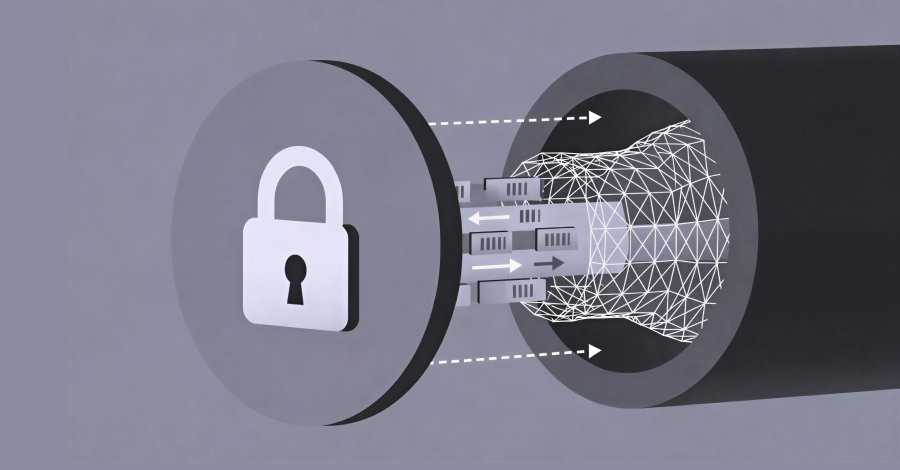
The theoretical “Quantum Threat” has officially become an operational emergency in 2026. This year, NIST (the National Institute of Standards and Technology) finalized the first formal regulatory framework for Post-Quantum Cryptography (PQC). The “Harvest Now, Decrypt Later” strategy used by bad actors means that any data encrypted with today’s standards (RSA or ECC) is already at risk.
The 2026 Migration Playbook
- Crypto-Agility: This is the 2026 buzzword for survival. It refers to a system’s ability to swap cryptographic algorithms without tearing the whole infrastructure apart.
- The NIST Standards (FIPS 203/204/205): Enterprises are now mandated to transition to lattice-based algorithms like ML-KEM (for key establishment) and ML-DSA (for digital signatures).
- Inventory Management: You cannot protect what you don’t know you have. 2026 is the “Year of the Inventory,” as firms map every instance of public-key cryptography across their TLS, VPNs, and device firmware.
The “Long-Secrecy” Priority
If your data needs to remain secret for more than 10 years (e.g., financial records, medical data, or TRON private keys), it must be migrated to PQC-ready environments immediately. By 2027, “Quantum-Resistant” will be as standard a label as “HTTPS” was a decade ago.