
The Great Paradigm Shift
For the past three years, the world has been enamored with “Generative AI”—models that talk, write, and draw. But as we move through 2026, the novelty of the chatbot has faded, replaced by a much more powerful architecture: Agentic AI. While traditional LLMs are passive, waiting for a prompt to generate a response, Agentic AI is proactive. It doesn’t just suggest a solution; it executes the workflow.
In 2026, the industry has shifted from asking “What can AI say?” to “What can AI do?” This transition marks the move from tools that assist to agents that act. An AI Agent is a system capable of independent reasoning, tool-use (using APIs, browsing the web, or accessing databases), and iterative self-correction. If a chatbot is a digital librarian, an Agent is a digital employee.
The Anatomy of an Agent
To understand why Agentic AI is the defining tech trend of 2026, we must look at its core components:
- The Reasoning Engine: Powered by advanced models like Claude 4 or GPT-5, the agent uses “Chain-of-Thought” processing to break complex goals into manageable sub-tasks.
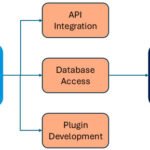
- Tool-Use (Function Calling): Agents can now interact with the physical and digital world. They don’t just “talk” about a TRON wallet; they can interface with the blockchain API to check energy levels or initiate a swap.
- Memory (Long-term & Short-term): Modern agents utilize vector databases to remember past interactions, user preferences, and previous errors, ensuring they don’t repeat mistakes.
- Self-Correction: This is the 2026 breakthrough. If an agent’s code fails, it doesn’t wait for a human. It reads the error log, rewrites the code, and tries again until the task is complete.
Enterprise Impact: The 72-Hour Fulfillment
The real-world results are staggering. In 2026, early adopters are reporting massive productivity gains. For instance, logistics giants are using “Hierarchical Multi-Agent Orchestration” to staff and optimize entire fulfillment centers in under 72 hours—a task that previously took weeks of human HR and operational planning. We are moving toward a world where agents work for days at a time on complex projects with minimal human intervention.
The New Human Role: The Architect
As agents take over the “doing,” the role of the human professional is being redefined. In 2027, the most valuable skill will not be coding or writing, but strategic orchestration. You are no longer the one doing the work; you are the architect designing the system, evaluating the agents’ output, and providing the high-level “intent” that guides the machine.